When do I use AI?
AI fascinates me but I'm no evangelist. Here are four areas where I actually find it useful.


As the subject matter of this newsletter suggests, I'm highly interested in AI - on how it works and how it affects us as individuals and as a society.
You may find it surprising that I'm not a heavy user of AI. Why?
Mainly because I don't feel the need for it in most circumstances, professionally and personally. That, of course, may change quickly.
There are two other reasons.
- LLMs are costly (we pay with our natural resources - energy and water, and they are extractive of society in multiple ways), so I consider the following before I decide to use an LLM - will it deliver a meaningful benefit that I can't obtain elsewhere? If the answer is no, I don't use it.
Here's a sobering article on data centres and how they affect the environment and local communities:
 Matteo Wong, Charlie Warzel
- I don't want to outsource my thinking and creative efforts. I read that some people can no longer write without using AI in some way, that sounds like a nightmare.
So, when do I use an LLM?
Initial research
Traditional online searches are not efficient if I want specific information from multiple sources (academic papers, blogs, news articles and online discourse) or websites (e.g. competitor websites). I'd ask an LLM to find the answers instead. I always check the source websites to make sure (1) they are reputable and (2) the information on the websites is consistent with the LLM's response.
When search engines fail
I also find an LLM handy for some curly searches. I'm a language nerd and I started a book on the Chinese language (Chinese by Jerry Norman); however, the book is written in English, including the Chinese text it references (it was published in the 1980s and I suspect printing a book in both English and Chinese was more challenging for western publishers back then) and I want to read those in Chinese.
Online searches for "Chinese translation of Jerry Norman's book Chinese" were unhelpful - they pointed to the original book. Claude, on the other hand, answered the same question with ease.
Yes — there are actually two Chinese translations of Jerry Norman's Chinese.
1. 《汉语概说》(Hànyǔ Gàishuō) — 1995 translation
The first Chinese translation was done by Professor Zhang Huiying (张惠英) of the Chinese Academy of Social Sciences' Institute of Linguistics, published by Yuwen Press (语文出版社) in 1995 under the title 汉语概说. The ISBN is 9787800068386. This is the older and more commonly cited edition.
2. 《汉语》(Hànyǔ) — 2008 translation
A second edition was published in 2008 by World Book Publishing / Cambridge University Press, translated by Hu Shuangbao (胡双宝), under the title 汉语, as part of the series "西方语言学与应用语言学视野" (Western Linguistics and Applied Linguistics Perspectives). The ISBN is 9787506292351 and it is 292 pages.
Using existing information and data to generate other documentation
A while ago I held several workshops with our engineers on a new build. We talked through mock up designs, expected user experience and the underlying business logic. Instead of documenting the discussions, I uploaded the designs to an LLM, asked it to access the meeting recordings, and gave it the task of writing the business requirements.
The requirements it came up with needed a fair amount of editing, and I rewrote some of them completely (not entirely its fault, as there was additional context that I didn't provide in the prompt), but it was a decent first draft, and it came up with a few ideas that I hadn't considered. I spent time refining the overall solution rather than writing from scratch.
Editing - to a degree
I wrote in the last newsletter that I used Claude as an editor. I used it for this post as well, but only for grammar. This post is conversational and I don't want to lose my voice by over-editing.
Jasmine Sun wrote an interesting article on AI's ability to write and edit.
 Jasmine Sun
Overall approach
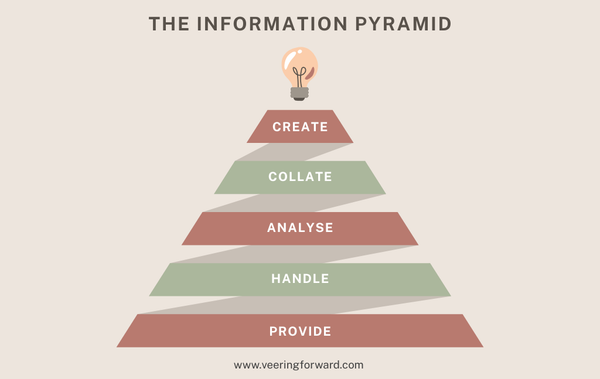
You can see from the examples above that I use LLMs at the initial and final stages of my work. The deep thinking that is the crux of my work is largely AI-free for now. I will experiment with incorporating AI in other ways, and I want to set up my own AI agents, but there are parts of what I do that I want to preserve. It is often in writing first drafts or tackling a new problem with fresh eyes that I come up with my best work.
How are you using AI (or not)?